
Mold Remediation & Removal in Reading & Berks County, PA
The Helping Company provides professional mold remediation in Reading and across Berks County, PA. We find the moisture source, contain and remove the mold safely, and prevent it from returning. Our IICRC-certified team restores healthy indoor air for homes and businesses.
Mold is more than an eyesore — it's a health hazard and a structural threat that can develop within 24–48 hours of water damage. We contain it, remove it, and fix the moisture source for good.
Mold thrives in damp, humid environments and spreads rapidly through spores that travel via your HVAC system and air, affecting areas far from the original moisture source. Exposure can cause respiratory issues and allergic reactions, particularly for children, the elderly, and those with compromised immune systems.
The Helping Company provides professional mold remediation following IICRC S520 standards. As an IICRC Certified Firm, we have the training, equipment, and experience to contain, remove, and treat mold — and to address the underlying moisture problem that caused it. If your mold is related to a covered loss, we handle the claim for you.
Our Mold Remediation Process
Mold Assessment & Testing
We start with a comprehensive assessment to identify the type, extent, and source of mold growth, working with third-party industrial hygienists to collect air and surface samples when needed. Independent testing ensures objectivity and provides documentation for insurance claims and clearance.
Containment
Before any mold is disturbed, we establish containment barriers using polyethylene sheeting and negative air pressure to keep spores from spreading. HEPA-filtered air scrubbers run continuously throughout the process to capture airborne particles.
Mold Removal & Material Demolition
Affected materials that can't be cleaned (drywall, insulation, carpet, ceiling tiles) are carefully removed and disposed of following proper protocols. Hard surfaces like framing and concrete are treated with antimicrobial solutions while our technicians work in full PPE.
HEPA Vacuuming & Antimicrobial Treatment
All surfaces in the contained area are HEPA vacuumed to remove residual spores, then treated with EPA-registered antimicrobial agents — neutralizing any remaining spores on structural surfaces before reconstruction begins.
Clearance Testing & Verification
After remediation, a third-party environmental professional conducts post-remediation verification (clearance testing) to confirm mold levels are within acceptable limits. We don't consider the job done until clearance is achieved — protecting you and documenting it for your carrier.
Moisture Source Correction & Reconstruction
Mold remediation without fixing the moisture source is a waste of time — it comes back. We identify and correct the underlying problem (a plumbing leak, poor ventilation, foundation seepage, or a previous water loss), then handle all reconstruction to return your home to pre-loss condition.
How mold remediation is supposed to be done
Mold remediation has a published standard — ANSI/IICRC S520 — and the gap between work that follows it and work that does not is invisible until the problem comes back. Our owner is an IICRC Master, and this is the process that designation is built on.
Containment before anything else. Disturbing mold makes it airborne. Before any material is touched we build a sealed containment around the work area and put it under negative air pressure using HEPA air scrubbers, so air flows into the containment and never out into the rest of your home. Remediation without containment does not remove a mold problem — it redistributes it, which is how a bathroom issue becomes a whole-house issue.
Removal, not treatment. Porous material that is colonized — drywall, insulation, carpet, ceiling tile — gets removed and bagged inside the containment. Non-porous and semi-porous material is HEPA vacuumed and cleaned. Spraying bleach on mold is not remediation. Bleach is mostly water, it does not penetrate porous material, and it leaves the moisture behind that caused the growth. Killing mold is not the goal; removing it is. Dead spores still trigger the same allergic response.
Find the water or you will be back. Mold is a symptom. If the roof leak, failed flashing, plumbing weep, negative grading or condensation problem is not corrected, growth returns regardless of how well the removal was done. We are a full exterior and plumbing-adjacent contractor, so we fix the cause and the consequence rather than handing you a referral.
Independent clearance testing. We recommend post-remediation verification by a third-party hygienist — not by us. A company that both remediates and grades its own homework has an obvious conflict of interest, and a clearance certificate from an independent party is also what protects you at resale.
The honest truth about mold and your insurance
This is the part most restoration companies are vague about, so here it is plainly: mold coverage is usually limited, and often severely.
Most Pennsylvania homeowners policies contain a mold sublimit — commonly in the region of $5,000 to $10,000 — and some exclude mold altogether. That sublimit applies even when the underlying water loss is fully covered. A significant remediation can exhaust it.
What is normally covered: mold that results directly from a sudden, covered water loss — a burst pipe, a storm-damaged roof — and that you addressed promptly. The chain of causation has to be documented, which is why the moisture readings and photographs taken on day one of a water loss matter so much later.
What is normally denied: mold from a long-term leak you knew about or reasonably should have; mold from humidity, condensation or poor ventilation; mold from flooding without a flood policy; and mold from deferred maintenance. "You should have caught this sooner" is the standard denial, and the counter to it is evidence of when the loss began.
We will tell you before we start whether we think you have a viable claim. If you do not, we will say so and quote the work directly — which is frequently cheaper than people fear, because a properly-scoped small remediation is a contained job rather than a whole-house event. See our insurance claims page for how we handle the covered cases.
Testing: when it is worth paying for, and when it is not
If you can see mold, a test mostly tells you what you already know. The money is usually better spent on finding and fixing the moisture source and removing the growth. Testing genuinely earns its cost in four situations: you can smell it but cannot find it; someone in the household has unexplained respiratory symptoms; you are buying or selling and need documentation; or you need post-remediation clearance to prove the work succeeded.
Be cautious of any company offering free mold testing that always finds a large problem requiring their immediate services. For clearance in particular, insist on an independent third party.
Questions homeowners ask us
Does bleach kill mold?
Not usefully, and it is not what remediation means. Bleach is mostly water: on porous material like drywall or framing it does not reach the growth below the surface and it leaves moisture behind, which is what caused the problem in the first place. It may remove the visible stain while the colony continues underneath. The standard requires physical removal of colonized porous material inside containment — and note that dead spores still cause the same allergic reaction, so killing mold was never the objective.
How much does mold remediation cost?
It depends on the affected area and how much material has to come out. A contained single-room job is a substantially different scope from remediation across a basement or through a wall cavity into adjoining rooms. We inspect, identify the moisture source, and give you a written itemized scope before any work begins. If insurance is likely to apply we will tell you, along with the sublimit you are probably working within.
Will my insurance pay for mold remediation?
Sometimes, and usually up to a limit. Most Pennsylvania policies carry a mold sublimit of roughly $5,000 to $10,000, and coverage generally applies only where mold resulted from a sudden covered water loss that was addressed promptly. Mold from long-term leaks, humidity, condensation or flooding without a flood policy is normally excluded. We will assess your situation honestly rather than promising a claim we do not think will be paid.
Do I need to move out during mold remediation?
Usually not. Proper containment under negative air pressure is specifically designed so the rest of the home stays usable while the work happens. Where remediation is extensive, involves HVAC, or a household member has significant respiratory sensitivity, temporary relocation may be sensible — and if it follows a covered loss, additional living expenses may apply.
Signs You May Have a Mold Problem
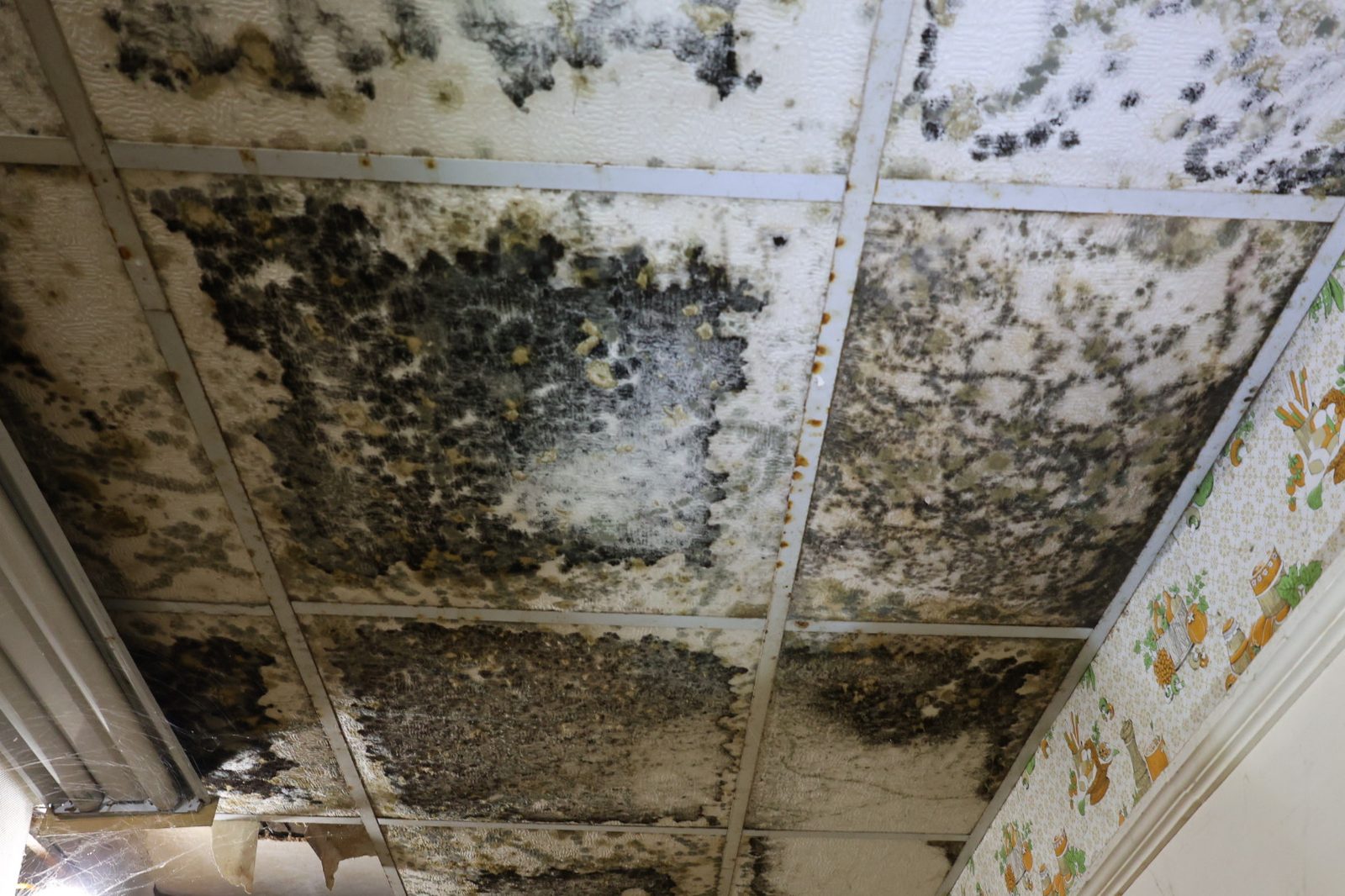
- Visible mold growth on walls, ceilings, or floors (black, green, white, or gray)
- Persistent musty or earthy odor, especially in basements, bathrooms, or crawl spaces
- Recent water damage that wasn't professionally dried
- Unexplained allergic symptoms, respiratory issues, or headaches at home
- Warped, bubbling, or discolored walls and ceilings
- Condensation on windows or pipes
- A history of flooding or plumbing leaks in the property
Mold Remediation FAQs
Is mold covered by homeowner's insurance?
Can I remove mold myself?
How long does mold remediation take?
What is the IICRC S520 standard?
From Our Recent Work


Think You Have a Mold Problem?
Call for a professional mold assessment. We provide IICRC-certified remediation across Reading & Berks County, with insurance claim assistance available.