
Water Damage Restoration in Reading & Berks County, PA
The Helping Company provides 24/7 water damage restoration in Reading and across Berks County, PA. We extract water, dry the structure, and rebuild, working directly with your insurance. Fast response limits mold and structural damage after burst pipes, storms, and flooding.
Burst pipe, flooded basement, or storm flooding? Within 24–48 hours, water leads to mold. We respond 24/7 to extract, dry, and rebuild — and handle your insurance claim start to finish.
Water damage is one of the most common and destructive emergencies a homeowner can face. Whether it's a burst pipe in the middle of the night, a flooded basement after a storm, an overflowing appliance, or a sewage backup, the damage gets worse by the minute — saturating drywall, warping floors, and soaking into framing.
That's why The Helping Company offers 24/7 emergency water damage restoration throughout Southeastern PA. Our IICRC-certified technicians respond quickly with commercial-grade equipment to extract water, dry your structure to industry standards, and prevent costly secondary damage — and because we specialize in insurance restoration, we handle your claim from start to finish. Not sure what to do right this minute? See what to do in the first 24 hours before help arrives.
Our Water Damage Restoration Process
Inspection & Damage Assessment
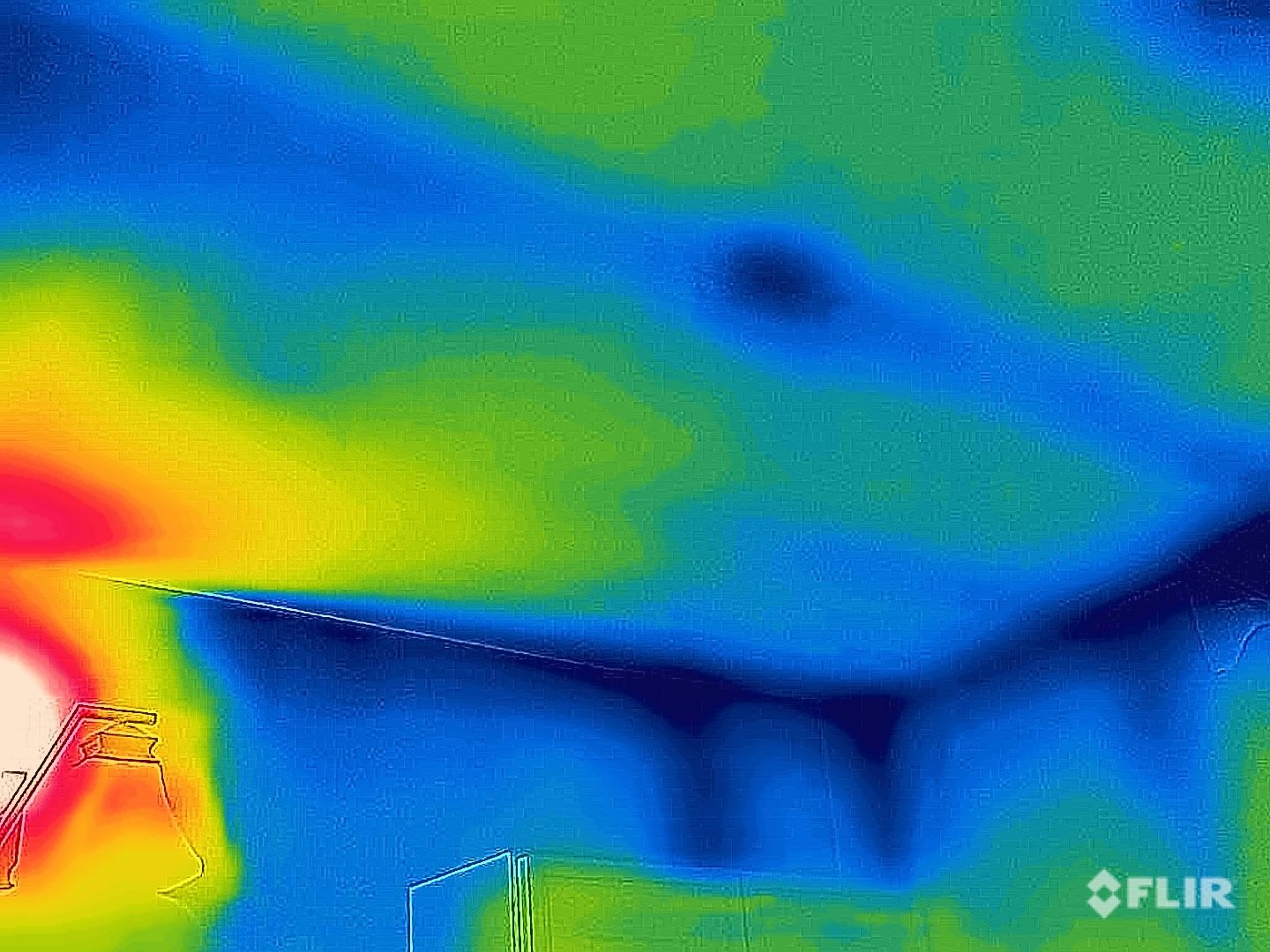
We dispatch a crew fast, stop the water source, and assess the damage using moisture meters and thermal imaging to find intrusion in walls, ceilings, and subfloors that isn't visible to the eye. Photo documentation for your insurance claim begins immediately.
Water Extraction
Standing water is removed with truck-mounted extraction units and submersible pumps that move hundreds of gallons per minute. The faster we remove it, the less damage your home sustains — including water held in carpet padding and upholstery.
Structural Drying & Dehumidification
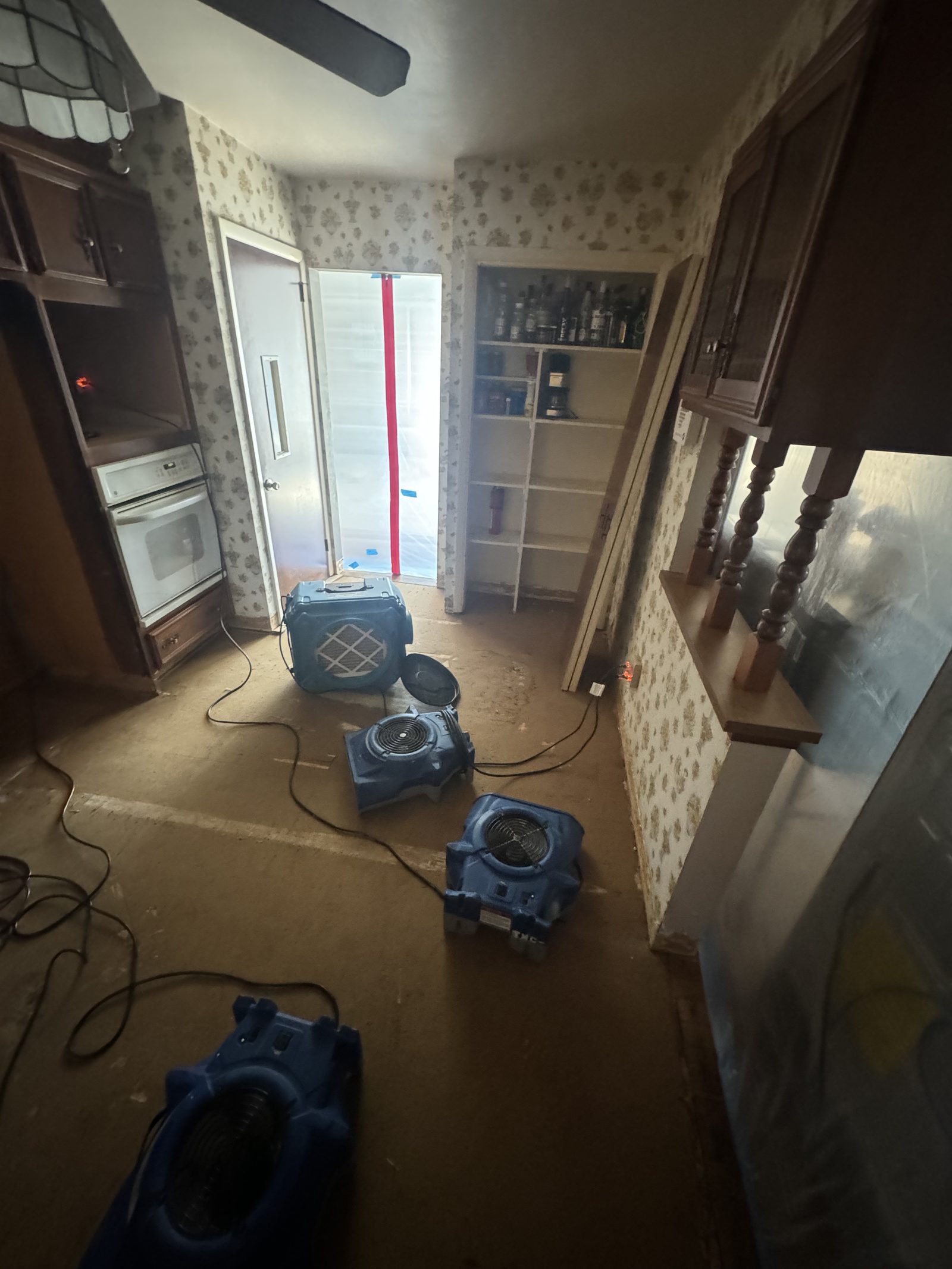
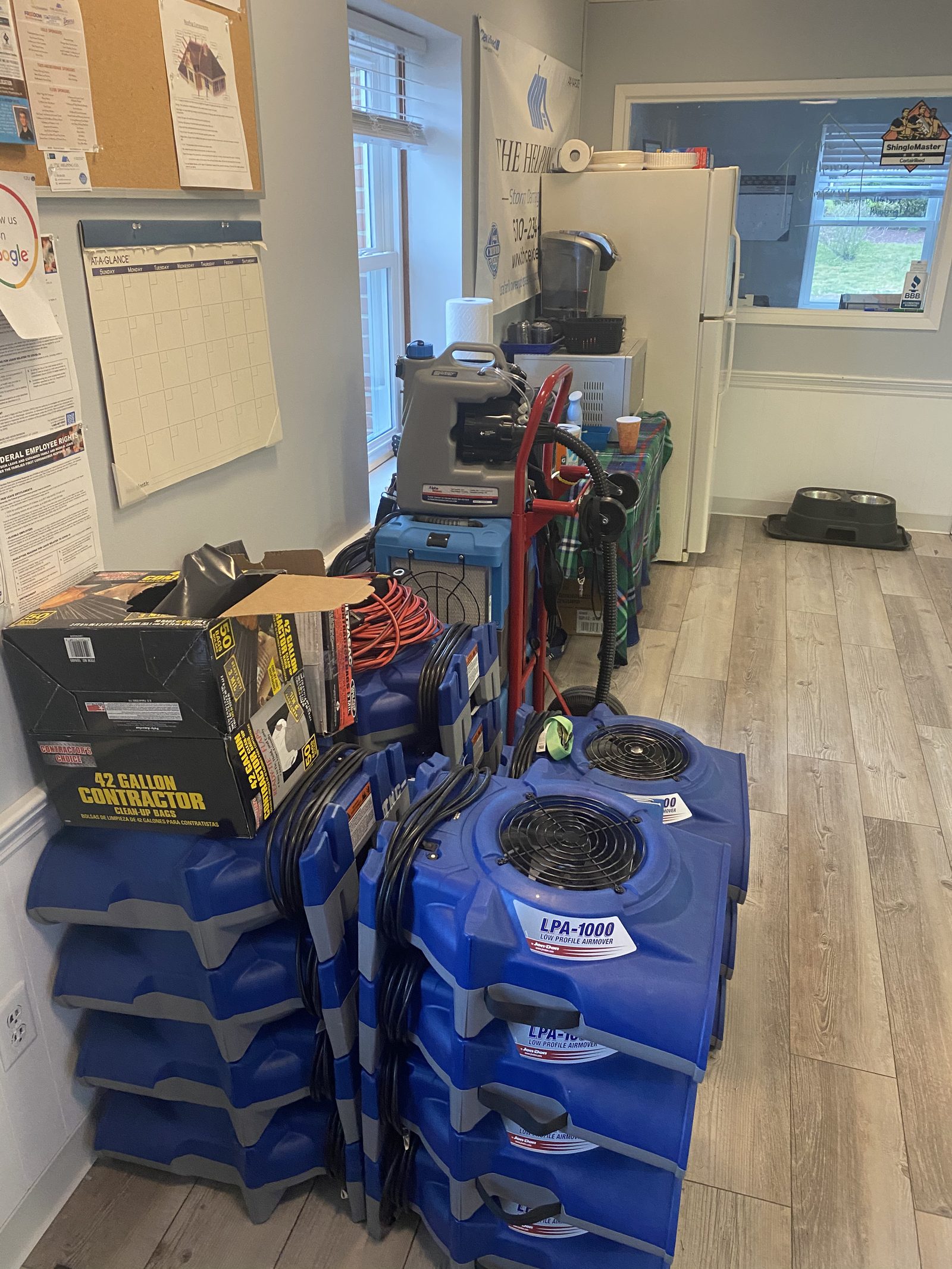
We set commercial air movers and industrial dehumidifiers to dry the structure to IICRC S500 standards, monitoring moisture daily with calibrated meters. This phase typically takes 3–5 days. Proper drying is critical — leftover moisture leads to mold, rot, and ongoing structural issues.
Cleaning, Sanitization & Odor Control
Depending on the water category (clean, gray, or black), affected areas may need antimicrobial treatment, sanitization, or content cleaning. Sewage backups and flood intrusions require careful handling to eliminate bacteria and health hazards, and we address any lingering odors.
Repairs & Reconstruction
Once your home is dry and clean, our construction team handles all repairs — drywall, flooring, painting, trim, and more. Because we're a full-service contractor, you won't need a second company to rebuild. We manage the entire project from emergency response through final inspection.
Emergency? We're Available 24/7.
Water, fire, or storm damage gets worse by the minute. Call now for fast emergency response across Berks County.
Restoration Work
How we actually dry a structure — and how you know it worked
Anyone can put fans in a room. Drying a building correctly is a measured process governed by a published standard — ANSI/IICRC S500, the Standard for Professional Water Damage Restoration — and our owner holds the IICRC Master designation behind it. Here is what that actually looks like on your floor.
We establish a dry standard first. Before we place a single air mover we take moisture readings from unaffected areas of the same material — the same species of hardwood, the same drywall, the same subfloor — in an untouched part of the house. That reading becomes the target. Without it, "dry" is an opinion. With it, "dry" is a number.
We map the water, including where you cannot see it. Water travels along joists, wicks up drywall, and sits under vinyl and laminate without showing a mark. We use penetrating and non-penetrating moisture meters plus thermal imaging to trace the actual migration path, then mark the wet perimeter. This is where most cheap mitigation jobs fail: they dry the visible puddle and leave a saturated wall cavity that becomes a mold claim three weeks later.
We size the equipment to the room, not to the truck. Air mover count is calculated from affected square footage and the class of water loss; dehumidifier capacity is calculated from the cubic volume and the load. Under-drying prolongs the job. Over-drying runs up an equipment line your carrier will question. Both are avoidable with the arithmetic done properly.
We log it daily. Every day equipment is on site we record moisture content at the same marked points, plus temperature and relative humidity in the affected area, the unaffected area, the dehumidifier outlet and outside. That daily drying log is the single most useful document in the whole file. It proves the structure reached its dry standard, it justifies every day of equipment rental to the adjuster, and it is what stops a carrier arguing that you ran fans for a week longer than necessary. You get a copy.
What your insurance actually pays — and what carriers try to deny
Water losses are the most commonly disputed claim we handle, and almost always for the same handful of reasons. Knowing them in advance changes the outcome.
Mitigation and repair are two different buckets. Emergency mitigation — extraction, equipment, containment, the work that stops the loss getting worse — is generally covered because your policy obliges you to prevent further damage. Reconstruction is assessed separately. Carriers sometimes pay the first promptly and then slow-walk the second. We scope and document both from day one so the reconstruction is not treated as an afterthought.
"Sudden and accidental" versus "gradual." This is the most common denial. A burst supply line is sudden. A fitting that has been weeping behind a vanity for eight months is, to a carrier, a maintenance issue. The distinction is often genuinely arguable, and it is decided on evidence — staining patterns, corrosion, material deterioration, thermal imaging. That evidence has to be captured before demolition, not reconstructed afterwards from memory.
Sewer backup and sump-pump failure are usually endorsements, not base coverage. Many Berks County homeowners find this out during the loss. If you have a basement and a sump pump, check whether you carry the endorsement — it is inexpensive and it is the difference between a covered claim and a five-figure bill.
Flood is never covered by a homeowners policy. Rising surface water is a separate NFIP or private flood policy. Water that comes through the roof or a pipe is not flood. Water that comes across the yard and under the door is. We will tell you honestly which one you have.
Matching and undamaged materials. If water destroys half a run of hardwood, carriers often want to pay for half. Pennsylvania adjusters vary on this. Whether you get a continuous, matching floor frequently depends on how clearly the scope argues the case — which is a documentation problem, not a luck problem.
Xactimate scope transparency
We write our scopes in Xactimate — the same estimating platform your insurance carrier uses. That matters for a practical reason: when our line items and your adjuster’s line items are in the same format with the same regional pricing, a disagreement becomes a specific conversation about a specific line, not a vague argument about the total.
We give you the full itemized estimate. You see the line items, the quantities, the unit prices, the depreciation and what is recoverable. If your adjuster’s number is lower than ours, we will show you exactly which lines differ and supply the photos, moisture readings and drying logs that support ours. You are never asked to trust a single lump-sum figure, from us or from them.
If you want the fuller picture of how claims work in Pennsylvania, our insurance claims page walks through the whole process, and what your adjuster will not volunteer covers the negotiation itself.
24/7 response and emergency tarping
Water damage is measured in hours. Drywall wicks within the first day, and mold can begin to establish in roughly 24 to 48 hours in the warm, humid conditions of a Berks County summer basement. That is why we answer the phone at 610-234-2210 around the clock rather than routing you to a call center queue.
If the water is coming through the roof, stopping the source is the first job. We carry tarping and board-up materials and can dry-in a storm-damaged roof the same visit, then handle the permanent repair as part of the same claim. A restoration company that cannot also roof has to subcontract that, and the handoff is where days get lost.
Questions homeowners ask us
How long does it take to dry out a house after water damage?
Most residential structural drying takes three to five days with equipment running continuously, though a saturated hardwood floor or a plaster wall can take longer. We do not guess: we set a dry standard from unaffected material at the start and take daily moisture readings until the affected material reaches it. You get the drying log, so you can see exactly when and why the equipment came out.
Will my homeowners insurance cover water damage?
Usually, if the cause was sudden and accidental — a burst pipe, a failed supply line, a storm-damaged roof. Gradual leaks are commonly denied as maintenance. Sewer backup and sump-pump failure normally require a separate endorsement, and rising surface water is flood, which needs a flood policy. We inspect, tell you plainly which category you are in, and document the evidence before any demolition happens.
Can I just run my own fans and dehumidifier?
For a small, quickly-caught spill on a hard surface, sometimes. The risk is water you cannot see — inside wall cavities, under flooring, along joists. Household fans move air but do not remove moisture at the rate needed, and a domestic dehumidifier is not sized for a structural load. If the drying is incomplete you get mold in the cavity, and because you handled it yourself there is no documentation to support a later claim.
Do you work directly with my insurance company?
Yes. We inspect and document the loss, write the scope in Xactimate, meet your adjuster on site, and manage the claim through to completed reconstruction. Our owner is an IICRC Master and HAAG Certified, which carries real weight when a scope is disputed. See our insurance claims process.
How fast can you get here?
We answer 610-234-2210 24 hours a day and aim to be on site the same day for active water losses across Reading, Berks County and the surrounding counties. If water is still entering the building we will tarp or board up on that first visit rather than scheduling a second one.
Why Homeowners Choose The Helping Co. for Restoration
IICRC Master Certified Owner
Travis Frees holds the highest designation through the IICRC — the industry's gold standard. It means we understand the science behind every restoration decision we make.
Insurance Claims Experts
With 20+ years working insurance restoration claims, we know how adjusters think and what documentation they need. We handle the claim from start to finish so you don't have to fight your carrier.
24/7 Emergency Response
Water and fire don't wait, and neither do we. Call any time, day or night, and we'll have a crew on-site as quickly as possible to begin mitigation and prevent further damage.
Full-Service Contractor
Unlike restoration-only companies, we also handle the rebuild — roofing, siding, drywall, flooring, painting — under one roof, so you don't have to coordinate multiple contractors.
HAAG Certified Inspectors
Our inspectors are certified by HAAG Engineering, the leader in storm damage assessment — recognized by insurers nationwide and adding real credibility when we negotiate your claim.
Locally Owned & Operated
We're not a franchise. We're a family-owned company based in Reading, PA with deep roots in Berks County. When you call, you're talking to neighbors who genuinely care about your home.
Have Water Damage? Don't Wait.
The first 24 hours decide how much of your home you save. Call now for fast water extraction and drying across Reading & Berks County.