
Frozen Pipes and Winter Water Damage: How to Prevent and Respond
The first really cold week of the year is the busiest week we have on the water side of the business. The pattern barely changes: a night in the teens, a pipe in an outside wall or a crawl space, and a homeowner who wakes up to water coming through the kitchen ceiling. Frozen pipes are one of the most expensive problems a Pennsylvania house can have in winter, and one of the most preventable.
This guide covers both halves: how to keep your pipes from freezing in the first place, and exactly what to do in the first hour if one bursts anyway.
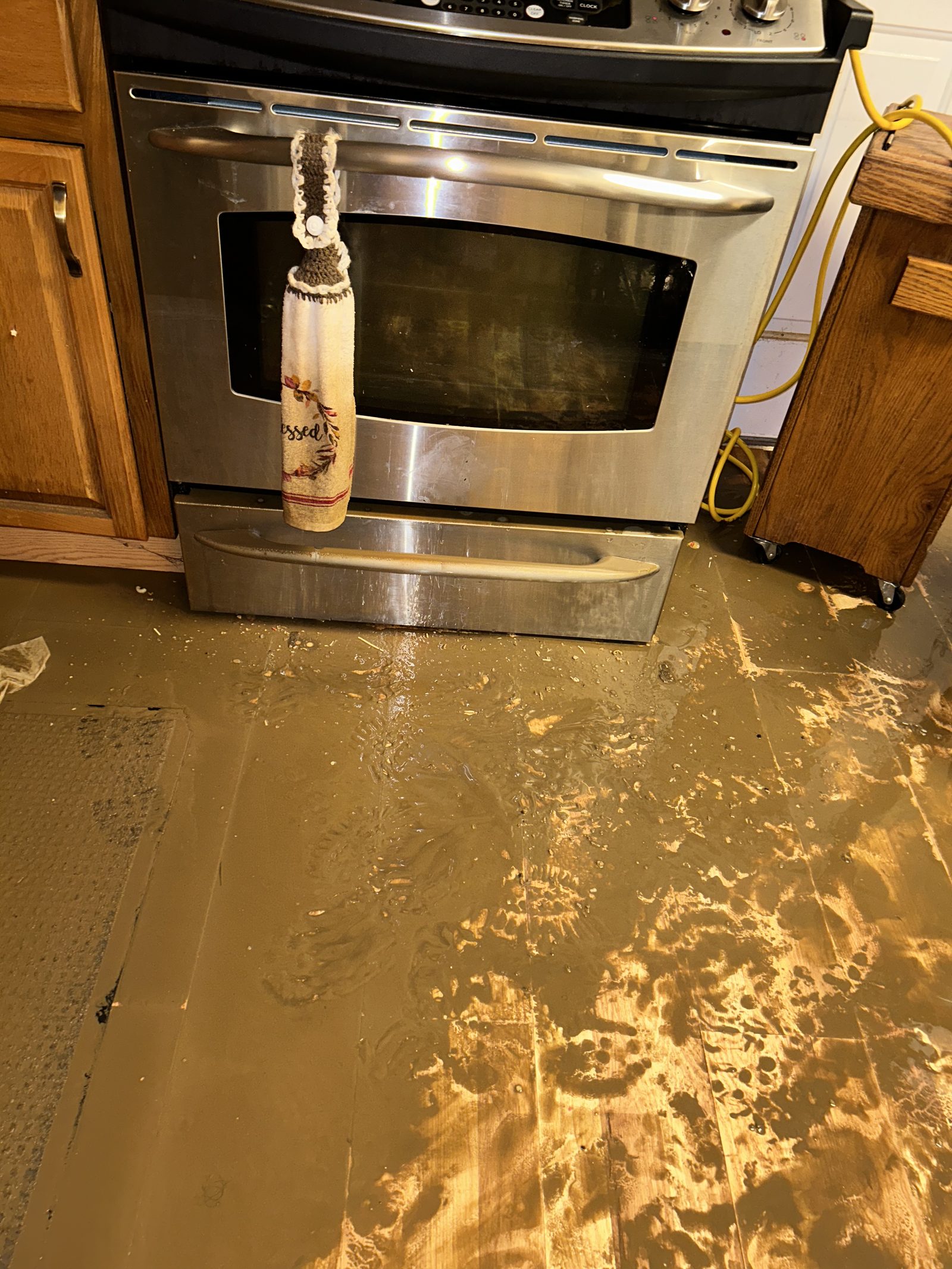
The short version
Keep the heat at 55°F or higher, even when you are away. Disconnect garden hoses, insulate pipes in unheated spaces, and open sink cabinets on the coldest nights. Know where your main water shut-off is today. If a pipe bursts, shut the water off first, photograph everything, and get drying started within 24 hours.
Why Pipes Burst (It Is Not Where You Think)
Most people picture ice expanding and splitting the pipe right where it froze. That is not usually what happens. When water freezes in a pipe it forms a plug. The water trapped between that ice plug and a closed faucet has nowhere to go, and as more ice forms, the pressure in that section climbs until the pipe gives at its weakest point — often several feet away from the ice, sometimes inside a finished wall.
That is also why a burst pipe often does not leak right away. The split is sealed by ice. The flood starts when the pipe thaws, which is usually mid-morning or when the heat kicks on. A crack as small as an eighth of an inch can release hundreds of gallons of water a day.
The pipes most likely to freeze in Berks County homes
- Supply lines in exterior walls, especially kitchen and bathroom sinks on a north- or west-facing wall.
- Pipes in crawl spaces, unfinished basements, and attached garages, where the temperature tracks the outdoors.
- Outdoor spigots (hose bibs) and the short run of pipe just inside the wall behind them.
- Lines near sill plates and rim joists, where cold air leaks in through gaps in the foundation and framing.
- Older homes in Reading and the surrounding boroughs with additions, enclosed porches, or plumbing that was rerouted through spaces that were never insulated.
How to Prevent Frozen Pipes
Most of this is a one-time, one-afternoon job, and most of it is free.
Before the first hard freeze
- Disconnect, drain, and store garden hoses. A hose left attached traps water in the spigot, even on a "frost-free" sillcock. If you have an interior shut-off for the outdoor spigot, close it and open the outside tap to drain the line.
- Insulate exposed pipes in the crawl space, basement, garage, and attic with foam pipe sleeves. They cost a few dollars per length at any hardware store.
- Use heat cable on the problem runs. For a pipe that has frozen before, a UL-listed, thermostatically controlled heat cable is worth it. Install it exactly to the manufacturer's directions and never wrap it over itself.
- Seal the air leaks. Caulk or foam gaps where pipes, cables, and dryer vents pass through exterior walls, and check the rim joist in the basement. A pipe in still 25°F air is far less likely to freeze than one in a 25°F draft.
- Find your main water shut-off and make sure it turns. It is usually where the line enters the basement, near the meter. Old gate valves seize; if yours will not move, have a plumber replace it now, not during an emergency. Tag it so everyone in the house can find it.
On the coldest nights
- Keep the thermostat steady. Do not set it back overnight during a cold snap.
- Open the cabinet doors under kitchen and bathroom sinks on exterior walls so room heat can reach the pipes. Move cleaning chemicals out of reach of kids and pets.
- Let a faucet drip. A slow drip, hot and cold, on the fixture farthest from the main shut-off relieves the pressure that actually bursts pipes.
- Keep the garage door closed if there are water lines in the garage.
If you are traveling this winter
- Leave the heat at 55°F or higher. Never turn it off.
- Shut off the main water and open the faucets to drain the lines if you will be gone more than a few days. Check with your plumber first if you have a boiler or a well system.
- Have someone check the house daily, or install inexpensive Wi-Fi leak and temperature sensors near the water heater, under sinks, and in the basement. Some insurers offer a discount for them.
- Read your policy before you go. Many homeowners policies limit or exclude freeze damage if the home was left unheated or vacant without the water shut off. More on that below.
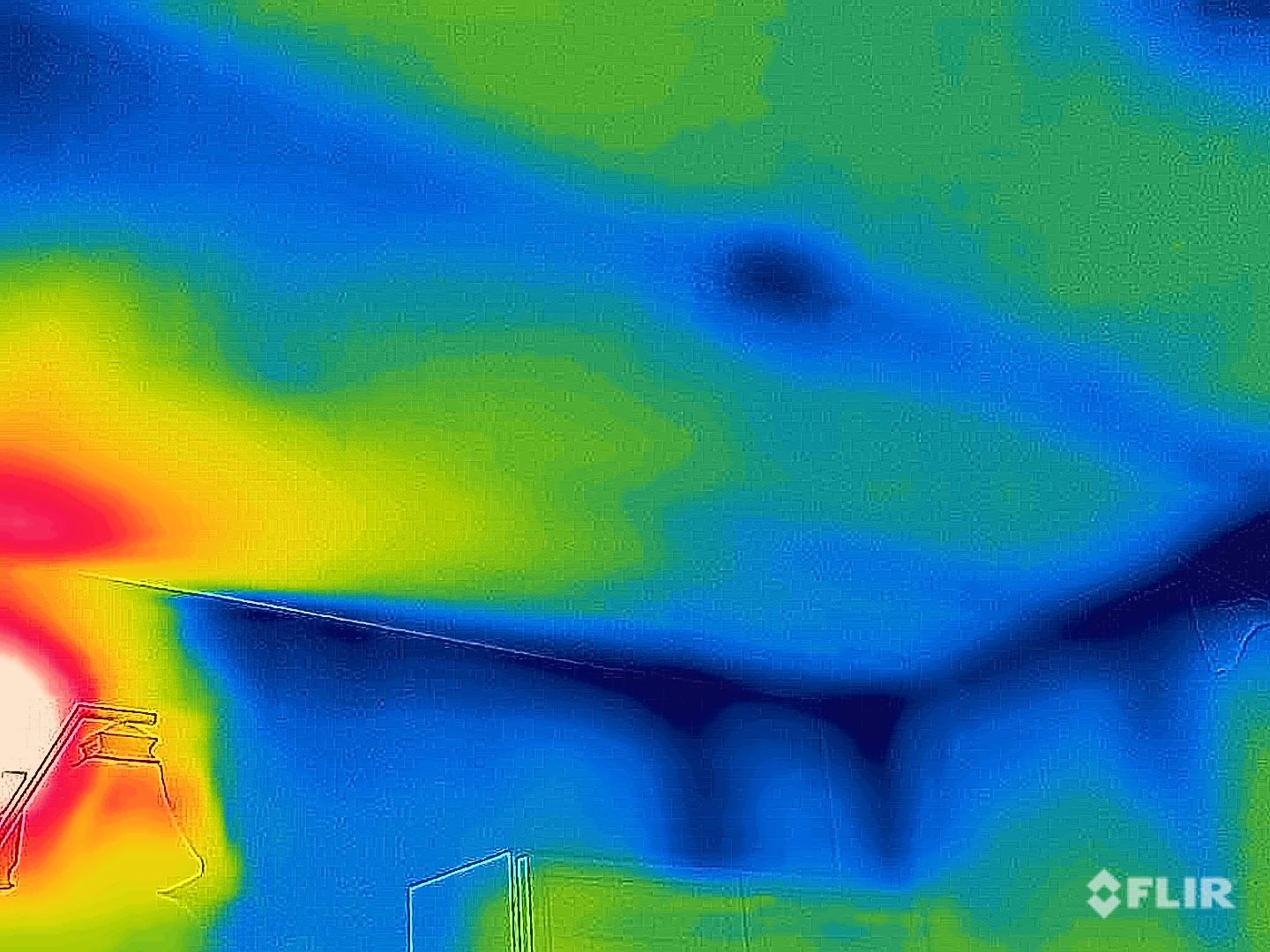
Signs a Pipe Is Frozen Right Now
If you turn on a faucet on a cold morning and get only a trickle, or nothing at all, assume a frozen pipe. Other signs are frost on an exposed pipe, a bulge in the line, or an unusual smell from a drain. Act now, before it thaws on its own:
- Leave the faucet open. As the ice melts, flowing water helps clear the rest of the plug.
- Apply gentle heat to the section you suspect, working from the faucet back toward the frozen spot: a hair dryer, a space heater kept well clear of anything flammable, or warm towels.
- Never use an open flame — no torches, propane heaters, or candles. House fires from thawing pipes happen every winter.
- Check the other faucets. If one pipe froze, others may have too.
- Call a plumber if you cannot find or reach the frozen section, or if it is inside a wall.
A Pipe Burst. What to Do in the First Hour
This is the order we would want you to follow. The first two steps are the ones that save the most money.
- 1. Shut off the main water valve. Every minute it runs, water is moving deeper into the subfloor, the walls, and the floors below.
- 2. Make it safe. If water is near outlets, appliances, or the electrical panel, turn off power to that area at the breaker — only if you can reach the panel without standing in water. If you cannot, stay out and call for help.
- 3. Drain the system. Open the faucets and flush the toilets to relieve remaining pressure and empty the lines.
- 4. Document before you clean. Take photos and video of the burst pipe, the water, the ceilings, the floors, and damaged belongings. Keep anything damaged until it has been documented.
- 5. Move what you can. Get furniture, rugs, electronics, and papers off wet floors. Put foil or blocks under furniture legs that have to stay.
- 6. Call a plumber for the pipe and a mitigation company for the water. They are two different jobs. The plumber stops the source; the restoration team removes the water and dries the structure.
- 7. Call your insurance company, or call us first. If you have not filed yet, it helps to have the damage documented and scoped before the adjuster visits.
We cover this first stretch in more detail in our guide to what to do in the first 24 hours after water damage.
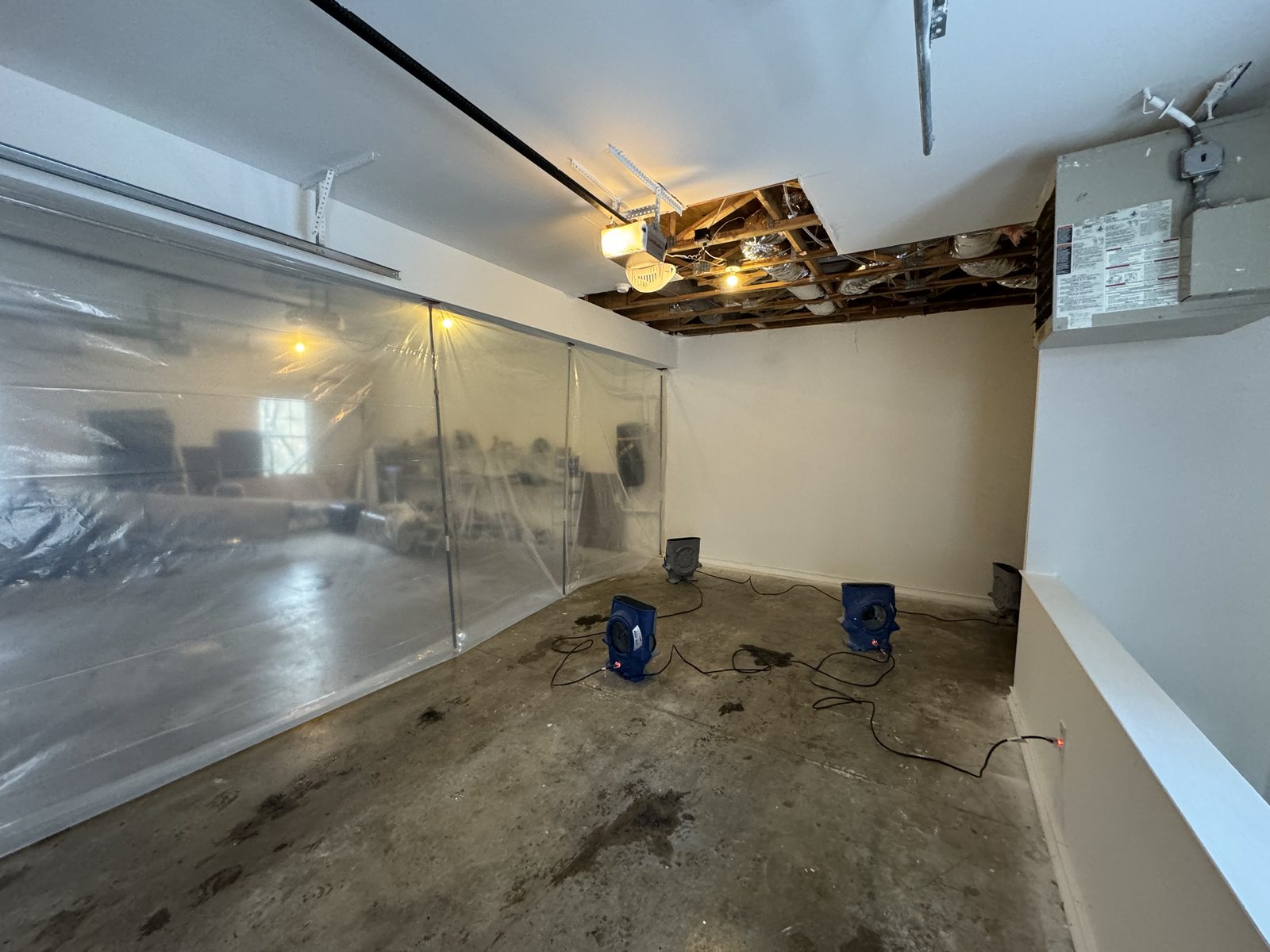
Why Drying Fast Matters More Than Mopping Up
The water you can see is the easy part. The problem is the water you cannot: wicked up into drywall, soaked into insulation, trapped under hardwood and in the subfloor. Mold can start growing on wet building materials within 24 to 48 hours, and a burst-pipe loss left to "air out" for a week is often a mold remediation job by the time anyone opens the wall.
Professional drying follows the IICRC S500 standard for water damage restoration. In practice that means:
- Moisture mapping with meters and thermal imaging to find every wet area, not just the obvious ones.
- Removing what cannot be saved, typically wet insulation and drywall below the water line, and carpet pad.
- Commercial dehumidifiers and air movers sized to the space, with readings taken daily until materials are back to dry standard.
- Documentation at every step, which is what your insurance company will want to see.
Clean water from a supply line is the easiest kind to restore, but it does not stay clean. Once it sits in a subfloor or reaches a basement, it picks up contaminants and the cleanup becomes more involved. Our guide to mold after water damage explains what happens when drying is delayed.
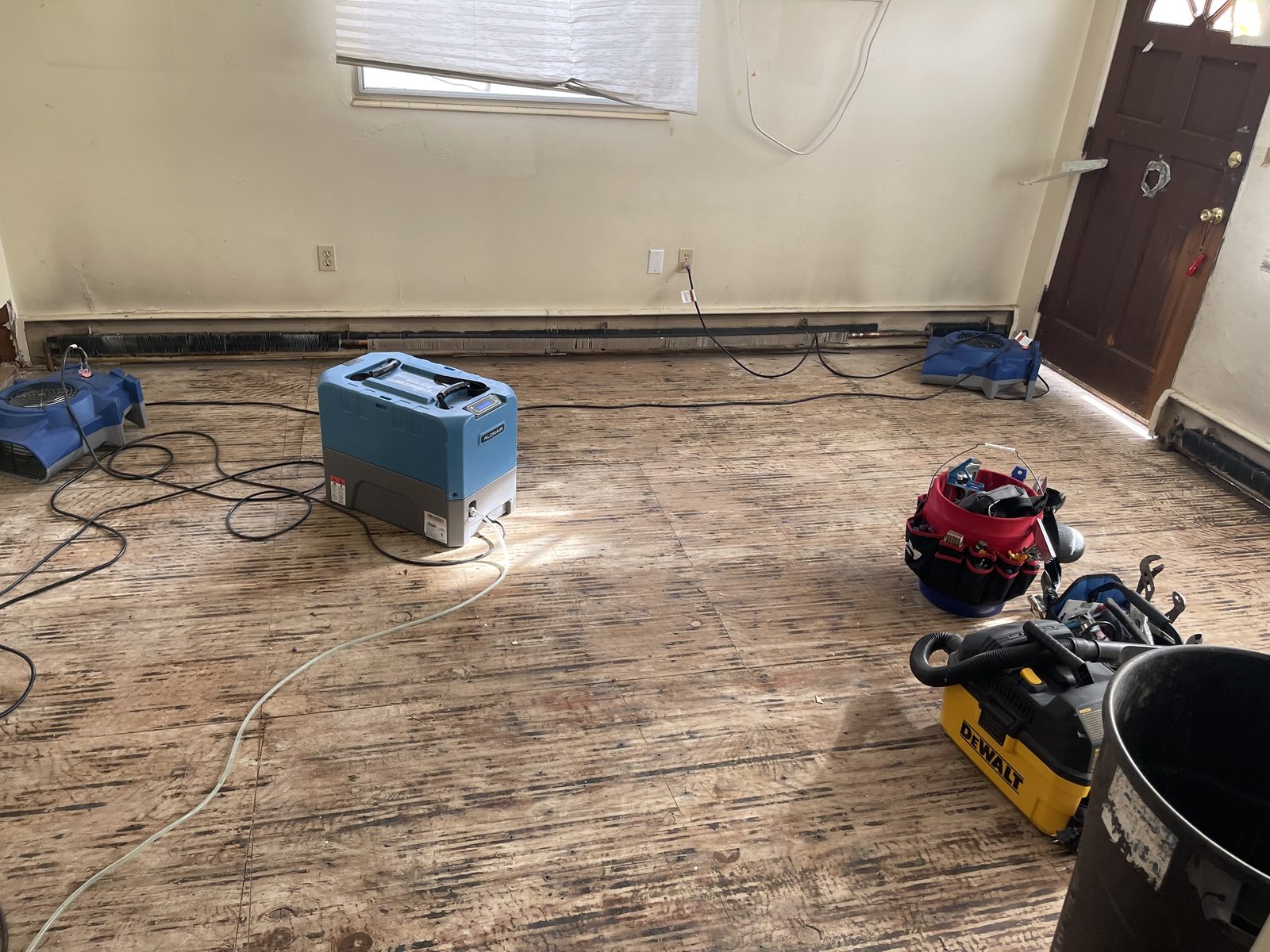
Does Insurance Cover Frozen Pipe Damage?
Usually, with conditions. Most Pennsylvania homeowners policies treat a pipe that freezes and bursts as a sudden and accidental loss, which means the resulting water damage — ceilings, floors, walls, cabinets, belongings — is typically covered, subject to your deductible ($250, $500, $1,000, or 1% of dwelling coverage, depending on your policy). The deductible is the only out-of-pocket cost for approved work.
The details that trip people up:
- The heat requirement. Many policies exclude freezing damage if you did not use reasonable care to maintain heat in the building, or to shut off the water and drain the system while it was vacant. This is the single biggest reason freeze claims get denied.
- The pipe versus the damage. Some policies pay for the water damage but not for repairing the pipe that failed. Others cover the access needed to reach it.
- Slow leaks are different. A drip that has been rotting a subfloor for months is generally treated as wear and tear, not a sudden loss.
- Report it promptly. Your policy requires you to protect the property from further damage and notify the carrier in a timely way. Starting mitigation right away is part of that duty, not a reason for denial.
To be clear about our role: we are a restoration contractor, not public adjusters or attorneys, and we do not negotiate your settlement. What we do is document the loss with photos and moisture readings, meet your adjuster on-site, reconcile the repair scope line by line, and submit supplements for anything the estimate missed. If you can, call us before you file. If you have already filed, call us today. Our page on how insurance claims really work walks through the process.
The Winter Pipe Checklist
If you only do one thing after reading this, make it this list:
- Find the main water shut-off, confirm it turns, and tag it
- Disconnect and drain garden hoses; close interior shut-offs to outdoor spigots
- Insulate exposed pipes in the crawl space, basement, garage, and attic
- Seal drafts where pipes and vents pass through exterior walls and the rim joist
- Keep the thermostat at 55°F or higher, day and night, home or away
- On nights in the teens: open sink cabinets and let a faucet drip
- Before travel: shut off and drain the water, or arrange daily checks or leak sensors
- Read the freeze and vacancy language in your homeowners policy
- Save our number: 610-234-2210, answered 24/7
Water from above is the other big winter problem. If you have not yet, run through our fall roof maintenance checklist — clogged gutters and poor attic ventilation are what turn December snow into ice dams and ceiling leaks.
Pipe Burst? We Answer 24/7.
IICRC-certified water damage mitigation across Berks County and nine Pennsylvania counties — extraction, drying, documentation, and the rebuild, with your adjuster kept in the loop.